Thursday, September 19, 2019

The last year of life

Hi, everyone.

Although I have occasionally put out some posts, mainly of general reflections and some original written pieces of mine, I've recently realized that it's been just about a year since I properly updated my blog with actual events, comings, and goings of my day-to-day life. And that's far too long.

It's hard to sum up such a long period of time in all its multifaceted complexities, especially in retrospect. But I'm going to do my best to summarize and get across an impression of this last year of my life, and some of the most important things that have happened in that time.

Senior year of college:

From August of last year until May of this year, I moved back to Beloit, Wisconsin to finish the last year of my undergraduate degree at Beloit College. The first semester was incredibly difficult, as a number of trivial and not so trivial matters all came to a head at once: not feeling at home anymore on campus because it had changed so much and there was such a disconnect between my first two years on campus and my senior year; getting my heart broken; dealing with intense culture shock while readjusting after my time in the Nordic countries; having to really come to terms and deal with my depression; dealing with a lot of academic pressure; and so on. Some adjustments and changes were made: I dropped my international relations major, as I knew that taking all the classes I would have had to in order to finish it, while possible, was not feasible with my mental health issues. I gave a symposium on what I'd learned during my experience on my second language program in Iceland the previous summer. I got involved with a Sustained Dialogue group as a means of having deep and important conversations with people about critical issues, and getting to know some people from the two new classes that had come to campus in my time away (which was easy, given that I was the only senior in my group). Already scheming my way back to the Nordic world I missed so much, I submitted my application for a Fulbright fellowship to participate in an Icelandic as a second language program at the University of Iceland in Reykjavik. I found an amazing, cozy, and deeply important place among the community and friend group I gained by living in the Sexuality and Gender Alliance (SAGA) house, who truly took me under their wing and made me feel so welcome in such a difficult time of my life. We even spent Thanksgiving at my friend Sloane's house, taking advantage of a much-needed chance to get off campus and just chill, talk, and watch movies before finals. After working very hard to put down roots again and get involved with different groups and initiatives on campus, I thankfully finished my rather awful first semester finally starting to feel like I was getting settled and regaining a sense of place on campus again.


I spent winter break in my hometown of Ann Arbor, and in St Louis, where my family lived until recently. At around three weeks, it was the longest period of time I'd spent in Ann Arbor since my family moved away from my childhood home a little over three years ago, and after such an emotionally and mentally difficult few months, it was deeply soothing and nourishing to spend such a solid amount of time in the place I come from, to make it feel like home again a little bit, and to spend time with loved ones and family friends I've known and cared about my whole life - at Christmastime, no less. I originally feared my time in St. Louis would be greatly boring, as I've never managed to make a lot of friends there, due to the fact that my family moved there after I started college and I was only ever there for college breaks. But it actually turned out to be quite a lovely and relaxing time - my mental health improved greatly, and I was able to take a bit of time for myself and work on some little personal projects, like watching movies and catching up on shows I'd wanted to for a long time, and reading a bit for fun (I finished three books and started a fourth in just three weeks!) before returning to campus for my final semester of college.


My final semester was in some ways better and in some ways worse than the previous one. On the one hand, I felt comparatively much more settled, and was able to benefit from the structures I'd built during the first semester that helped me feel more at home and settled in. And I felt far less depressed. But unfortunately I struggled with far worse anxiety, and had some pretty tough, full academic schedule to work with on top of writing my thesis. I struggled with intense burnout, and at times really struggled to move forward.
But overall, it was quite nice in other ways. I solidified my place among the SAGA friend group and community, and the house environment changed nicely when some friendly new faces moved in. I wrote my thirty-page thesis about reciprocal linguistic influence between Russian and the Turkic languages, and gave a symposium about my thesis research halfway through the semester. I continued working my job as a student manager of the call center. I made some great new friends. I took chances and went all out, performing three times. I attended some great events on campus that showcased queer ball culture beautifully. And had a lot of fun.
Perhaps most triumphantly, I was chosen for the Fulbright fellowship I'd applied for, which was an intensely proud moment for me, a culmination of my previous Icelandic language studies, and a testament to my now solidified Nordic passions and life trajectory.
In May, I enjoyed all the great events during Senior Week - the Senior Gala, Party, visits from friends, and an excellent graduation ceremony - and walked across the stage in front of my advisor Donna Oliver to shake President Scott Bierman's hand, proudly holding my Bachelor of Arts in Russian as four intense years of learning, growth, experiences, trial, error, friendship, love, and struggles finally came to a close.


Spring Break in New Jersey and New York

When I had my spring break in March, I traveled to my dad's hometown of New Brunswick, New Jersey to meet him there at my grandmother's house and stay with her for the week. We spent lots of time with my grandmom, eating out at some of the great local restaurants. We visited a few of my aunts and uncles who live in the area, making the short drives out to Long Valley in the inland hills to visit my Uncle Rob and Aunt Carol, and to Point Pleasant Boro to visit my Uncle Bill, Aunt Jane, and their dog Molly, and go for a great walk along the shore of the Atlantic Ocean. I went into New York City two different days of the week, once to catch up with my good friend Sikander over a Sri Lankan lunch and a delicious, authentic Pakistani chai, and do a bit of wandering on my own before and after, and a second time with my dad to explore the city while he had a meeting.
I had a lot of fun everywhere I went and spent time during the week - New York is one of my favorite cities on the planet, and I greatly enjoy every visit. But I truly enjoyed everywhere we went - the variety of the different places, the coziness of spending time with relatives, and the beautiful feeling of being able to easily and quickly access authentic spaces of diverse communities. It was a much-needed escape from the Midwest and the day-to-day stresses of college life.


Summer 2019 in Italy and the Midwest

After graduating, I went back to St. Louis with my parents, and just managed to have a late dinner with my sister the evening we got there before she flew out the next morning to work an intense and exceptional position as a worker at a refugee welcome center in Austin, Texas. The rest of the six days I spent in St. Louis were devoid of any noteworthy activity, since I got all four of my wisdom teeth out at once the second day and was down and out for the count for several days thereafter.

After about six days back in St. Louis, I left for Ann Arbor with my parents. As usual, I had a great visit and a lovely time being back. I didn't do too many specific things; I made my rounds of my favorite restaurants and parks in town, visited some old haunts, got to catch up with a couple of my closest high school friends, and had a lovely college grad party which was attended by many of my dearest family friends and loved ones in town.
Every time I go back to Ann Arbor, I struggle a little bit emotionally, as returning to the place where I grew up, which I miss so much, as a visitor is still something that I struggle to adjust to and makes me feel detached from my past. But this time just like being back last winter, I felt more relaxed and at home than I had pretty much anywhere else previously for a long time.


After a week in Ann Arbor, my parents dropped me off at Chicago O'Hare on their way back to St. Louis, and I left for a six-week-trip to Italy.
I applied for a couple of summer programs, but didn't get in for the one that I wanted the most, the ARIT fellowship to study Turkish for six weeks at Boğaziçi University. As I studied elementary Japanese both semesters of my senior year of college, I looked into doing a summer program at Akita International University in Akita, Japan, but unfortunately didn't qualify to apply since I was going to be graduating. Realizing that I wasn't exactly desperate to rush into another academic program, especially given the fact that I was going to be on one during my Fulbright too, and that it had been a while (nearly a year and a half) since the last time I'd been in Italy, I decided to spend a large chunk of time visiting my friends and relatives in Italy.
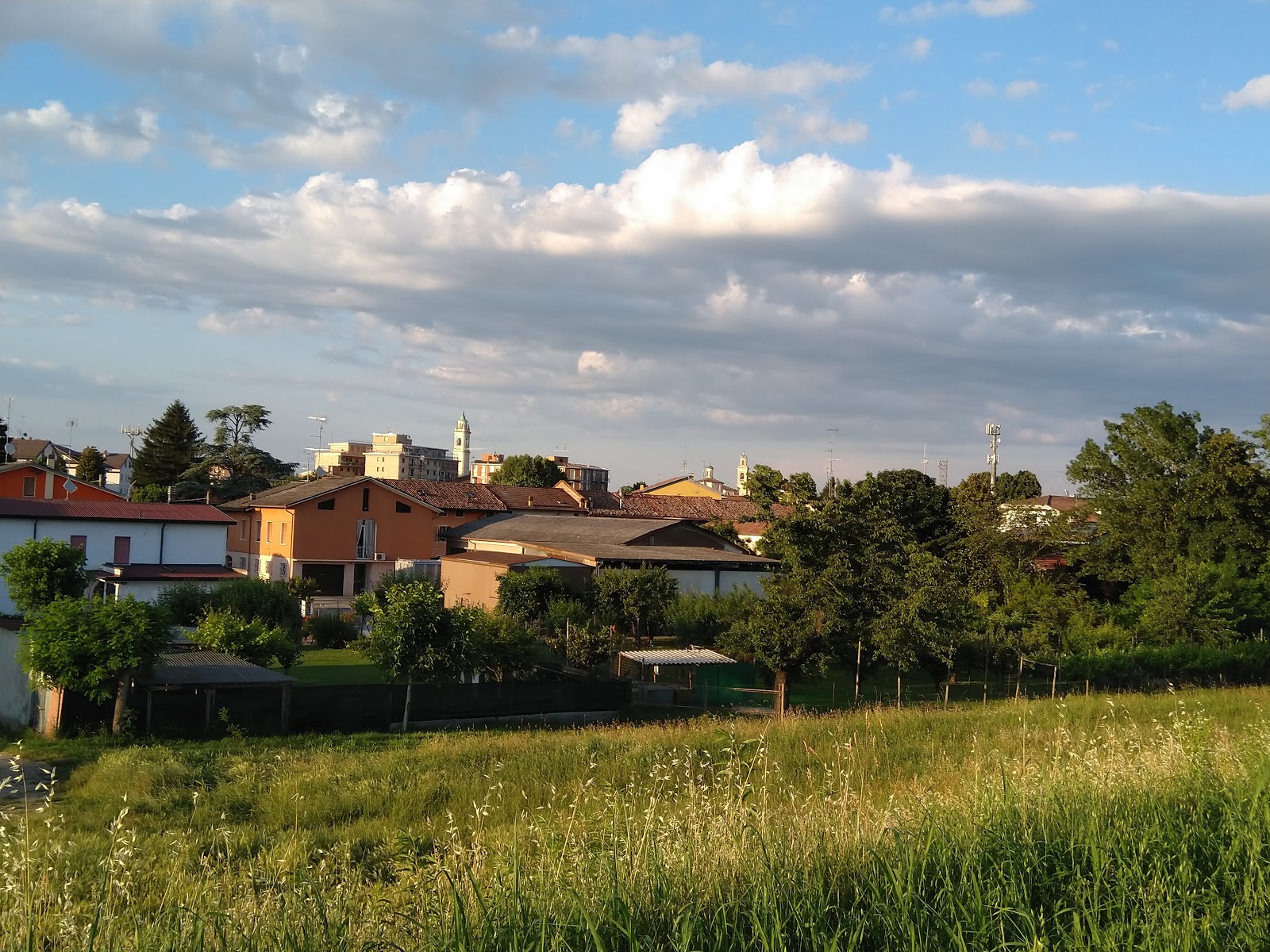
I'll be honest in saying that the trip was something of a mixed bag. Being in Italy was, of course, amazing. As a place that I feel extremely connected to and at home in, it felt amazing to be back, and I felt so happy to catch up with all my loved ones there. I spent some relaxing afternoons swimming at the local pool to escape the intense, oppressive heat and humidity. I got to spend some amazing quality time with my relatives, close family friends, friends my own age, and even some AFS exchange students and volunteers that my friend Alex knew from volunteering in the local Intercultura Mantova chapter. I traveled to some lovely places - to Milan, to Rome, to my mom's close childhood friends' new house in the Apennine hills near Parma, to the beach at Marina di Carrara in Tuscany. I went on some lovely day trips and to an incredible falconry show with my aunt and uncle. And I got a rare chance to just relax, soak it all in, and catch up on some personal projects, like reading and writing for fun, perhaps most notably the piece on my identity, which I've since titled Everywhere Boy, inspired by the memories of my cherished childhood summer visits to Italy, reawakened in my mind by the feelings and sensations of being back in Viadana over the summer for the first time in eight years.
But the time period I chose to be there, as I found, just sort of happened to be a bad time for pretty much everyone that I was there to visit. My relatives were all working. My few friends my own age in Viadana that I remain close to were all studying for exams and had little free time, because the Italian university system is terrible in that exams are scheduled and sprinkled all throughout the year. My good friends that live further afield were also all either still studying or working. And so there were long stretches of time where I wasn't doing much of anything, repeating the same monotonous routine of waking up, going for a bike ride in the morning before it got too hot, avoiding the worst part of the day indoors, and then going to the pool in the afternoon. And so I was often left alone with my thoughts. 
I unfortunately spiraled in terms of mental health and got to some very dark thoughts and places, mainly on account of the constant body shame I was getting from my grandmother and the intense anxiety and depressive symptoms I had, which were being greatly aggravated by concerns about the news, reports, comments, and online rabbit holes I fell down relating to climate change and ecological breakdown. 
(As a side note, it's still something that I'm extremely concerned about and am doing my best to spread awareness about and fight for systemic change against in my daily life, but thankfully I haven't been constantly fighting depressed thoughts and anxiety attacks related to it for a while now).
In spite of the intense issues I dealt with over the course of the summer, it was still a great time full of some fun and important memories which I'm hugely grateful for, and it felt almost like coming full-circle in a way, being back for a long visit at the same time of year I always used to visit as a child, and reliving all those beautiful and important memories having just graduated college.




I left Italy on July 25th, and after arriving back in Chicago, I took the Van Galder bus up to Madison, Wisconsin, where my parents just recently moved to from St. Louis. The month I spent in Madison was honestly fantastic. Although I was still dealing with my eco anxiety, Madison was a very soothing place to be in - it reminds me a lot of Ann Arbor, as it has similar vibes as a college town with a similarly sized university. It's also a familiar place, since I spent a fair amount of time there with my parents while I was at Beloit, and Wisconsin in general feels quite homey to me after having lived there for the last three of the years I've lived in the States. I fell in love with Madison more deeply this time, exploring the downtown, the shops and restaurants, and the lovely beaches along Lake Monona and Mendota which surround the isthmus on which the city is built. It was deeply relaxing and fun. I also had a chance to hang out with two friends I met at Beloit. I also visited Chicago for a couple of days, staying at my lovely Beloit friend Julia's house, and meeting up with a few friends in town: Ri, who was our teaching assistant in freshman year Russian, and Miki and Chloe, Julia's roommate from last year and her sister. I also got a chance to see my dear, dear friend Paula for an afternoon, which was so fun and deeply restorative.


In the last week before leaving for Iceland, I went down to St. Louis with my mom, as most of my stuff was there and I had to pack. I got to hang out a bit with my sister as she arrived from a three-week visit to Italy, having arrived just days after me. I spent a lot of time going through my old journals, memory boxes, and school notebooks. And went for a few bike rides in Forest Park.


After returning to Wisconsin, I spent the afternoon of my final full day in the U.S. visiting my alma mater for a few hours, making the short drive down to Beloit to catch up with some friends, who had just returned to campus for the start of the semester the next day. I barely processed the fact that I was back due to lack of sleep and stress for the preceding few days. But it was nice to see everyone for a second nonetheless.


Iceland so far

As of publishing this, I've been in Iceland for just over three weeks. And so far, it's been a truly lovely experience.
I left Wisconsin on the 26th of August with a sense of surreal disbelief, and admittedly great anxiety, mostly just related to the stress of moving abroad alone again to a place where I don't have as many support systems. I had a fairly relaxing and uneventful trip to Reykjavik, and spent two days staying at a hostel before moving into my University of Iceland dorm, Gamli Garður (which means "old garden"). Since arrival, I've met the other Fulbrighters in Iceland during our orientation day, who are a dynamic bunch doing everything from research on Arctic fish stocks and glacial reconstruction to teaching Old English at the University. I've gotten a whole bunch of bureaucratic stuff sorted out, and now feel much more settled. I've been out a couple of times to events organized by the University and with new Italian, Catalan, and Swiss friends I've made in my University. I tried out for and got into the Háskólakórinn, the University of Iceland choir, which has proven an excellent space to practice Icelandic with the Icelandic choir members and through the music we sing, as well as a lovely return to singing, which is something that has always brought me great comfort and happiness (I sang in choirs throughout most of middle and high school). I've started classes at the University in the first year level of its Icelandic as a second language bachelor of arts, and although I do have difficulties at times, I've already improved greatly in Icelandic compared to when I arrived. And I've done my best to settle into a routine here, going to the pool often, of course (this time so far mostly to Vesturbæjarlaug, the closest pool to campus), for walks along the pond in the center of town, Tjörnin, when the sun is shining, and doing work at Kaffihús Vesturbæjar, a cafe near the pool, and at Háma, the university cafe.
This being my third time in Iceland, everything feels a lot more familiar and homey compared to other experiences I've been on like this in the past. It's almost felt like coming home, in a way. Since I got to Iceland, I've felt happier, more fulfilled, and like my life has more direction and purpose, more so than I've felt in a long time. And I couldn't be more thankful for that.





Thank you for reading. Going forward I'll do my best to keep blogging at at least fairly regular intervals. I've got some great ideas and drafts for posts keyed up, and I fully intend to publish them as much as I can going forward. And on top of that, I intend to blog at regular intervals, perhaps every month or so, about what and how I'm doing here on my Fulbright.

Heyrumst!
Nico


A beautiful fall song that I've been listening to a lot lately which reminds me of my childhood. 

Wednesday, August 21, 2019

Good reads II

Hello everyone,

today I'm spontaneously creating a little series out of a post that I made back in 2016 about good books I've read and would highly recommend unto others. I've read a number of good books since, and realized I forgot to mention some good ones last time, so I'll include them here. Hope you guys enjoy! Happy reading.

1) Putin Country: A Journey into the Real Russia, by Anne Garrels. This book is without question one of the most comprehensive and well-thought out I've ever read about Russia. It focuses mainly on various issues affecting people in contemporary Russia, but including plentiful historical information to contextualize everything. Every chapter covers a different topic, from gay rights and income inequality to alcoholism among Russian men and Islamophobia. The chapters often include interviews with people whom the author met during her various stints residing in and around Chelyabinsk, a city at the southern edge of the Urals, a sort of rural "average Russian city." I thoroughly enjoyed this book, and was especially appreciative of the knowledge it gave me while I read it during my study abroad semester in Moscow. Anyone interested in Russia and international affairs should check it out.

2) The Little Book of Icelandic, by Alda Sigmundsdóttir. I'll be recommending several of Alda's books, as she's one of the most talented, enjoyable, and well-researched contemporary Icelandic writers, particularly when it comes to the history and current events in her country and writing about them for a foreign audience. This book unsurprisingly details the "idiosyncracies, delights, and sheer tyranny of the Icelandic language," offering a beautiful and easily accessible vision of its history, development, unique words and worldview, and all that makes it unique and terribly difficult to learn. If you're interested in Icelandic, Iceland, Nordic or Scandinavian languages and cultures, or languages and linguistics in general, definitely have a look at this one.

3) The Little Book of the Icelanders. Perhaps the book that Alda is best known for, this one gives a humorous, frank, and insightful view of Icelandic culture, mannerisms, and tendencies from the inside out, making full use of Alda's unique ability to relate to and talk about these things and then relay them to non-Icelanders, being an Icelander who spent much of her early life abroad and has thus experienced her own country from both an insider and outsider perspective at the same time. Again, a must-read for any fellow Icelandophiles.

4) The Little Book of the Tourists in Iceland. Alda's most recent book to date offers a crucial and fascinating understanding of myriad issues within contemporary Iceland vis a vis the huge surge in tourism from about 2013 onward, and how it has both positively impacted the country by offering a critical new sector to its economy following the 2008 financial crash, as well as numerous ways in which it has put a strain on the country (from an already understaffed and overworked emergency response force needing to go out of its way to rescue tourists that fail to head warnings of glacial crevasses and dangerous sea currents to how delicate environments can be greatly damaged by clueless travelers). Anyone who is planning on traveling to Iceland as a tourist needs to read this book, as it offers a lot of insight into how Icelanders view tourists, and how to visit the country in a careful and conscientious way that will allow for the best possible experience.

5) Deep Mountain, by Ece Temelkuran. This book is a beautiful retelling of Temelkuran's journey to bridge the gap between the Turks and Armenians caused by the Ottoman genocide of the Armenian population in Anatolia in 1915, which still causes great tension today along with the Turkish government's continued and insistent denial of its genocidal status. She travels to various locations from Paris to Venice Beach to interview Turkish and Armenian expatriates, and then back to Turkey and Armenia themselves to bring together the disparate views of writers, activists, and scholars from all walks of life into one volume, including many thoughtful and sensitive insights into the nature of home, belonging, and nationality. I would highly recommend this book to anyone interested in Armenia, Turkey, their cultures, histories, and diplomatic relations, as well as in general identity and experience pieces.

6) There Was And There Was Not, by Meline Toumani. Another book looking at the complexities of intersection between the Armenian and Turkish worlds and worldviews. Initially, Toumani beautifully relays her story and background growing up as a member of a tightly knit Armenian community in New Jersey, where Turkish restaurants and products are staunchly boycotted. Later on, she details her experience of moving to Istanbul as an adult to conduct research and to meet and connect with Turks herself on her own terms, and discover the past of her Armenian ancestors' presence on Turkish soil, finally traveling to Armenia itself for the first time to investigate the dynamics of a state greatly shrunken from its historical size. It is difficult to convey in so many words how amazingly beautiful this book is, and how much information it allows one to take in on the whole issue. Again, anyone who has the slightest interest in Armenia, Turkey, or anything to do with either of them simply must read this book.

7) The Culture Smart! series. This series is made up of short and compact books simply titled by their respective countries they are about, and offer a brief crash course in the geography, history, demographics, cultural tendencies and communicative habits found in them. Great resources for anyone visiting a country for the first time, or wishing to learn more about them in an introductory manner.

8) Simon vs The Homo Sapiens Agenda, by Becky Albertalli. This book is the one on which the 2018 hit movie Love, Simon is based. It is narrated from the perspective of Simon Spier, a closeted gay high school student, as he begins to navigate coming out to his friends and family, falling in love, and the terrifying possibility of being outed by a classmate who is blackmailing him. It's beautiful, it's funny, full of heart, and an easy read. Definitely see the movie too, but give the book a try too, as it has many strengths and hidden treats which are unfortunately left out on screen.

9) The Finnish Way: Finding Courage, Wellness, and Happiness Through the Power of Sisu, by Katja Pantzar. Written by a Canadian daughter of two Finnish parents who eventually moved back to Finland and wound up starting a family in her ancestral homeland, this book is a fantastic account of numerous, simple little tips and tricks that are great gifts from Finland and all of the Nordic countries to the rest of the world. From the great mental and physical benefits of biking to work and spending plentiful time in nature and second-hand markets to the toxin-flushing temperature changes of going back and forth between cold water and the traditional Finnish sauna, this book is an ideal and fairly easy read for anyone interested in learning more about Finland, the Nordic countries, and great tips to integrate into their everyday lives for greater happiness and well-being.

10) Habibi, by Naomi Shihab Nye. The day after young Palestinian American Liyana has her first kiss, her father announces that their family will be moving from St. Louis, Missouri to his homeland of Palestine. Once arrived, Liyana struggles to navigate cultural and linguistic boundaries and confusion when she meets her Palestinian relatives for the first time, as well as her friendship and feelings with a young Israeli Jew named Omer. This is a simple but beautiful book with a fascinating view on family, friendship, love, and identity that I would recommend to pretty much anyone.

11) La Bella Lingua, by Dianne Hales. In this book, Hales details her experiences, struggles, and triumphs of learning Italian, and offers tremendous insight into the nature of the language and its varied history and rich expressive powers. A good read for anyone into Italy, Italian, Romance languages, and languages in general.

12) The Italians, by John Hooper. In this well-researched and up to date work, Hooper gives a fantastic overview of diverse aspects of Italian culture, history, and society, from immigration and LGBT issues to minority populations and the importance of fashion, as well as additional insights from interviews with other scholars and locals. This is a crucial resource for anyone seeking to better understand Italy and its people.

13) Found in Translation, by Nataly Kelly and Jost Zetzche. This book is the culmination of detailed and well-researched insight into the importance of translation and the other mediums, media, and worldviews that it enables us to access, as well as all the intricacies and beauty of human language that are difficult, if not impossible, to properly understand, contextualize, and transmit through translation. A must-read for anyone into languages and linguistics.

14) The Not-Quite States of America, by Doug Mack. This is a fantastic and incredibly important book for anyone looking for a better or more detailed understanding of the history and contemporary state of the United States' territories. Mack travels from the US Virgin Islands to Guam and Puerto Rico to the Northern Mariana Islands and American Samoa to interview locals for frank, unfiltered, and honest insight on the territories' unjust treatment and ongoing colonization, while also giving ample background on the beauty, richness, and resilience of their respective cultures. This book is amazing and incredibly educational, and I cannot recommend it enough.

15) Getting Bi. This anthology by well-known bisexual activist, scholar, and writer Robyn Ochs puts together an incredibly talented and diverse mixture of poetry, stories, and insights of bisexual people from all over the world of various ages, gender identities, experiences, and worldviews. An enjoyable and critical read for anyone interested in LGBT issues and identity, especially the unique struggles faced by bisexual people who all too often suffer ridicule and ostracism from not only straight people, but fellow LGBT people as well.

16) Recognize: The Voices of Bisexual Men. Edited by Robyn Ochs and H. Sharif Williams, this bisexual anthology is quite similar to Getting Bi, but focuses specifically on the stories told and issues faced by bisexual men in particular. An excellent companion to the former.

17) Dewey: The Small-Town Library Cat Who Touched the World. A truly adorable and fun tribute to the former cat in residence at the Spencer Public Library in Spencer, Iowa. After finding a tiny orange kitten left in the library drop bin on one of the coldest nights of a harsh winter, librarian Vicki Myron decides to nurse him back to health and let him take up residence in the library. His heartwarming story brought him and the library itself great fame, and he was well loved by library workers and patrons until his death in 2006. An excellent feel-good read for anyone who loves (or even doesn't particularly like) cats.

18) A Work in Progress, by Connor Franta. One of the earliest examples of the now inescapable trend of YouTuber books, Connor's book is an excellent time capsule of his thoughts and experiences up to the particular time of his life in which the book was published, fully acknowledging its malleability and potential for change. It artfully integrates his straightforward and insightful accounts of his experiences growing up, finding his way, coming out of the closet, and creating a platform and career with beautiful photographs of meaningful places and memories. Even those who are not familiar with Connor's videos will probably find something to enjoy in this book.

19) Lettera a una ragazza in Turchia, by Antonia Arslan. Meaning "Letter to a Girl in Turkey," this is one of Italian-Armenian author Antonia Arslan's best known works. The whole book recounts the history and background of Arslan's Armenian ancestors stretching back several generations, and how their world is of course turned completely upside down by the dramatic and brutal events of the Armenian genocide. Unfortunately, I don't think it exists in English translation. But anyone who feels able or at least up to the challenge of reading it in Italian would likely enjoy it.

20) Istanbul, by Orhan Pamuk. In this autobiography, the famous Turkish author gives a long and storied account of his majestic and beautiful hometown, contextualizing its centuries of rich history against the backdrop of his childhood, life, memories, and the places important to him and his family members. Long, dense, and loaded with complexities, it's definitely not an easy read and not for everyone. But anyone who decides to strap in and give the extra effort to experience it will not be disappointed by one of Turkish literature's most brilliant minds' account of its most famous and perhaps most beautiful city.

21) Syria Burning, by Charles Glass. Having been published in 2015, this book is certainly a bit dated at this point. But it still stands as one of the most effective, comprehensive, and honest accounts of the Syrian Civil War, and how its devastating and cruel effects have affected the subsequent outpouring of Syrian asylum seekers, as well as the utter devastation the conflict has caused to Syria's rich historical traditions and sites, and religious diversity. Not exactly a happy read, but incredibly helpful to understanding current events and one of the most unfortunate and war-torn places on Earth.

22) Books and Islands in Ojibwe Country, by Louise Erdich. Erdich is a well-known and talented fiction writer. But in this book she recounts a real-life journey of hers deep into the heartland of her Ojibwe ancestors in the Boundary Waters (the huge and intricate system of lakes on the Minnesota-Ontario border) with her recently born youngest daughter in toe. The title is a reference to the ancient rock paintings on large boulders found on exposed cliffs and in water near lake islands in the area, and how these paintings and the land itself hold just as much literary power and tradition within them as any modern book. This is a truly beautiful book that I'm sure anyone could find enjoyable elements in.


Enjoy!


Nico

Tuesday, June 25, 2019

Eco-friendly tips

Hi, everyone.

Over the course of the past year or so in particular, I've been doing my best to cut corners on my own consumption, and make the best choices possible in terms of limiting wastefulness, as amazing movements and organizers such as Greta Thunberg, the Fridays for Future initiative, Alexandria Villaseñor, Earth Uprising, and others fighting against the nefarious forces contributing to climate change have gained traction, and numerous eco-friendly and zero waste alternatives have been coming about.

Let me say first and foremost that I am by no means an expert or authority on this subject matter. I'm simply an average deeply concerned twenty-three-year-old civilian who wants to do his best to encourage conversation, change, and fight for a future for this world and all those who inhabit it, particularly the younger generations. I'm by no means perfect, and have much room for improvement in how I approach these matters. I will also admit that lately the news around climate change have been greatly impacting my mental health, triggering my anxiety and depression, and that at times it is difficult to feel hopeful about the future. But my hope is that by sharing these tips and changes that I try to apply in my everyday life with all the power I have, I can show others ways in which they too can make a difference, in many cases by choosing to do things that are already very much possible and accessible.

1) Use bamboo toothbrushes instead of plastic ones.
Plastic toothbrushes are one of the biggest contributors to the onslaught of plastic products that are finding their way into ecosystems, endangering the ocean in particular, and take hundreds of years to decompose. There are numerous options out there for purchasing bamboo toothbrushes - I myself ordered a pack a few months ago from Wowe Lifestyle which were very cheap, costing about $11 for a pack of four of them. They work just as well as regular toothbrushes, last the same amount of time, and are completely biodegradable - just pull out the bristles when you're done with one and then compost it, or otherwise just throw it out and it will rot in the landfill. I honestly would recommend them a lot. If you happen to have any old plastic toothbrushes lying around and are concerned about throwing them away, there are all sorts of random and creative uses you can find for them - I myself keep an old plastic toothbrush in my guitar case and use it to clean the dust off from the frets in-between the strings!

2) Refuse single-use plastic whenever possible.
It's no secret that the overpollution of single-use plastic products is one of the great crises of our time - because of their durability and the centuries many of them take to break down, they often find their ways into waterways and eventually, the ocean, and are mistaken by animals as food, all the while shedding microplastics that are terribly difficult to clean and work their way up the food chain, causing health complications and wreaking havoc everywhere they go. Limiting our consumption of single-use plastic products is crucial, and there are numerous options available for durable, long-lasting products made from sustainable materials, like glass or metal straws, my aforementioned bamboo toothbrushes, cloth bags to replace plastic ones, and so on. Furthermore, investing in projects and initiatives such as The Ocean Cleanup, Oceana, and others that work hard on cleaning up plastic products already loose in the ocean and other waterways is incredibly important for mitigating the problem.

3) Eat less meat, or go vegetarian/vegan. 
The meat industry is one of the biggest contributors to global carbon emissions, between the power used for the factory farms where most livestock are bred, raised, and cruelly slaughtered, the machinery and mass transportation that has to go into keeping the grounds where livestock are kept, growing the food that they're fed, and transporting them to slaughterhouses and eventually to stores and homes, and the enormous quantities of water that are needed to bring up animals raised for red meat in particular, not to mention the fact that the vast majority of global deforestation, especially in rainforest regions, is done to make way for farming and raising livestock for meat. Obviously vegetarianism and veganism are not accessible or possible lifestyles for everyone in the world to make; many people, especially rural or indigenous communities in isolated environments, many of whom have been sustainably hunting and raising livestock for thousands of years, depend on meat and animal products and may not have many non-animal products to eat. And vegetarian and vegan alternatives are not always necessarily good the environment inherently, as mass production of anything does require a great amount of resources and labor and can also be harmful. But they're also undoubtedly better for the environment compared to most animal products, so for those of us who live in regions of the world where most animal products come from highly polluting factory farms and there are ample non-animal product alternatives available, eating less meat and animal products is a surefire way to make a massive difference in one's individual carbon footprint. It pays to be cautious with these products as well, to chose, say, rice milk over almond milk given that almonds are a highly water-intensive crop, and to make sure that products are sustainably grown and harvested, avoiding, say, quinoa that is grown and harvested by impoverished communities in Central America that are greatly overworked, mistreated, and underpayed.

4) Shop locally and in-season as much as possible. 
Farmer's markets are amazing things. By patronizing local businesses and farmers and getting to taste locally-grown products in all their respective seasons, you'll also minimize the distances that food needs to be transported, and ensure that it doesn't go bad while having to travel crazy distances. Whenever you're able to, choose strangely shaped fruits or vegetables - even if they're in perfect condition to eat, deformed or weirdly shaped specimens that don't comply with typical aesthetic standards are simply thrown away on account of their appearance alone. Additionally, keep food and ingredients visible or in clear containers in the fridge to minimize the chances of it spoiling and having to be thrown away, as studies have shown that we eat what we can see clearly, and compost everything that you're able to.

5) Use soap and shampoo bars instead of ones that come in plastic bottles. 
Another huge contributor to the plastic crisis is that of plastic soap and shampoo bottles. I personally have exclusively used soap bars since the start of this year, and have only used one small plastic bottle of shampoo, using shampoo bars almost exclusively. Soap bars sold in paper bags or small cardboard boxes are widely available, even in places where they're sold alongside bodywashes packaged in plastic, for comparable prices, and so are quite accessible. Shampoo bars often tend to be a bit on the pricier side, but I've found them just as, if not even more, long-lasting than bottled shampoo, as it often takes just a quick rub against a wet head in the shower to have enough to wash with. It's a switch I cannot recommend enough.

6) Travel responsibly. 
This one is definitely tricky. Most forms of long-distance transportation rely on carbon-based technology and are a source of greenhouse gas emissions. It goes without saying that making the choice to walk or bike whenever possible is greatly important, as it avoids unnecessary emissions. As for the others, it's not necessarily as easy or clear cut as saying that, for instance, taking a train is inherently more efficient or causes fewer emissions compared to a plane, as the footprint depends on a large amount of contextual factors, such as the technology used, distance traveled, number of passengers transported, energy inputs (i.e. using a train over a plane in Europe almost definitely would emit less, given that most trains in Europe are electric), and so on. But it can be tentatively said that, in terms of emissions relative to number of passengers traveled, the modes of transportation could be ranked as follows: local public transportation, bus, train, plane, car. Of course, it pays in any context while planning travel to research available options and keep factors like those listed before in mind, and to carefully look into options for offsetting emissions from travel.

7) Avoid retail, thrift and shop responsibly!
Due to the resources needed to produce new clothes, the fashion industry is another huge contributor to global carbon emissions, as well as to waste, as many metric tons of clothes wind up in landfills every year, and many clothes are made from materials that shed microplastics into the water system whenever they're washed. Therefore we need to reevaluate our relationship to fashion and retail. Only buy new clothes that you need, and whenever possible, buy your clothes from thrift shops and drop off your old clothes there, and look for clothes made from sustainable materials such as hemp. As for the issue of microplastics from existing clothes, there are laundry filters out there that can be used to trap them and minimize the offset from loads of laundry as much as possible.

7) Organize, protest, and most importantly, VOTE.
Although things may seem gravely daunting and it's easy to get bogged down and feel hopeless, individual choices DO make a big difference, especially when done en masse, as it helps to keep the conversation alive, open people's eyes, and lobby for change. But it's no secret that, while important, individual choices can only go so far when 100 corporations are responsible for over 70% of all carbon emissions, and it will be pretty well near impossible to make any significant, lasting improvements without massive systemic and policy changes. So support and uplift the voices and messages of climate activists, join movements, join protests whenever you are able to and feel comfortable doing so, and vote for candidates with eco-friendly platforms and explicit intentions to enact important and necessary changes and control on dangerous industry.

8) Delete your old emails and stored online files.
This seems incredibly simple and banal, but many computer servers need air conditioning to be cooled, and the more emails and files they support, the more cooling they need to properly function. Deleting old, unneeded files and emails is a great little way to keep emissions to a minimum!

9) Don't despair. 
I know that, as I mentioned before, this is pretty difficult. I myself will make no secret of the fact that I'm terrified of many aspects and implications of the future with all of these issues going on. But let's not give up. We owe it to ourselves, to everyone in the world, especially to the younger generations that will have to take it over and the marginalized and impoverished communities suffering the most who have contributed the least to the problem, to fight for what's right, to demand change, to show governments and corporations that they must be held accountable for their undeniable role in the climate crisis, and that we will not let them get away with destroying the environment and, as Greta Thunberg so accurately puts, "stealing our future and selling it for profit." Use your energy and motivation to support change and justice. Remember that no one is perfect, and that what we need and can realistically have right now is not a world of people living perfectly zero waste lifestyles, but a world of people consciously making choices for good, even if they can't access every alternative. Keep the conversation alive, help people open their eyes, and above all, continue to demand change. The beautiful Earth is our only home, and we have to take care of it and fight for it.


Wednesday, May 29, 2019

The sentimentality of places, continued

Hey everyone!
A while back I wrote a post called "the sentimentality of places," all about different places in the world that I've been and forged some kind of special relationship with, and what they mean to me. In the intervening months since I published that post, I've had some wonderful chances to explore new places that have presented wonderful new experiences for me, and today I wanted to share those with you all.
So this is the sentimentality of places, continued.


The first two have a shared characteristic between them, at least within the context of college life:
Whenever I talk to people about my life and experiences at Beloit, one of the things I usually end up highlighting is that, although the school is situated in a fairly small community compared to what I and many of my classmates are used to, it's fairly easy, cheap, and efficient to reach Madison and Chicago from there. I've visited both of them from Beloit many times, and as such have come to form ample impressions of them, and have many great memories from these places.

1) Madison, Wisconsin:
Madison, in many ways, reminds me a lot of home. It's quite a bit bigger than Ann Arbor, and also has a bit more political weight as the state capital. But the presence of the University of Wisconsin's main campus, which is similar in size and scope to the University of Michigan back home, gives it a comparable feel. Many of the buildings are very pretty, and admission to most of the main landmarks of the city is free of charge. The Capitol Building in particular is a big one, being at the literal heart of the city, and very aesthetically pleasing to look at inside and out. Madison is the one of the two cities that I tended to visit more often - as Beloiters can get a $9 roundtrip discount on bus tickets from campus, compared to $44 roundtrip to Chicago, it usually was the one I'd visit if I was just wanting to leave Beloit and explore on a whim. And it's a great place to do that. I love being able to blend in in the city's sleek coffee shops and eccentric shops, losing myself in the greater anonymity compared to Beloit. I've also stayed in Madison with my parents on a couple of weekend visits of theirs, and have fond memories of strolling the city's streets in highly contrasting seasons. I'm always up for a day in Madtown.
2) Chicago, Illinois:
I've been to Chicago many times even well before I came to Beloit; as it was a comfortable three-ish hours away from my hometown of Ann Arbor, it was popular as a destination for weekends or short trips during school breaks. Indeed, for a long time I'd go at least once a year, more or less, and I have many fond memories from when I was small of bright lakeside views in spring time, and energetically enjoying the children's playground at Navy Pier. More recently, since I started college, Chicago has become the second most common destination of my brief escapades from Beloit whenever I start to feel bogged down or stifled on campus, one of my main logistical transit points for when I'm moving between campus and home (regardless of the method of transport), the site of a couple of cool conferences I've attended, and also gained a bit of a homey side as well as I've grown closer with my bestie Paula and been most graciously and generously hosted at her cosy Libertyville domicile, exploring the city with a local to guide me. Aesthetically and architecturally I think Chicago is breathtaking, with hypnotically tall steel and glass buildings making for an elegant contrast between the blue of Lake Michigan and the open skies. And I love how grand and worldly it is, without losing that relaxed, laid back Midwestern touch.


3) New York City:
New York is a place I've been a fair number of times in my life, as it's quite familiar territory for my parents, who lived there for ten years before I or my sister came into the world, and we have lots of relatives on my father's side who live nearby in New Jersey, so trips to visit Jersey-based relatives over the years have often included passages of varying lengths through the City on the side as well.
It wasn't until my visit to the New York/New Jersey area last September right before I left for Russia, when I went into the City two days in a row, once for my good friend Sikander's violin recital and once just to hang out with him for a while, that I started to see the City in a new light and truly, properly fall in love with it.
I think that because, to my previous point, I visited New York as a side part of bigger trips, I'd always associated it with movement, with passage, and thinking about New York as a place often came with a feeling of nostalgia for travel. However, going back two days in a row last year, spending part of the time moving around it introspectively by myself and the other parts with a dear friend who is a well-established local, I got to see it in a whole different light.


4) Turku, Finland:
As I've not shied away from mentioning in my posts about my experience in Finland, it was certainly not without challenges. My life in Turku was by no means perfect, and there were times when I felt touches of resentment towards the elements of monotony and difficulty that made it challenging. But overall, the town was a comfortable and fascinating home base through which to experience Finland. It had everything I felt I needed - plenty of cute cafes and tasty restaurants, a welcoming riverfront promenade, well-connected transportation systems, and a patchwork of elegant little towns and pristine parks in its surroundings. Turku is something of a special place in Finnish history, as it was the capital through all of Finland's six-hundred year stint as a Swedish province, and that history is truly perceptible in the parts of the city that have been preserved since that era, such as the Cathedral, the Old Square, and the area around the Castle. The presence of five different universities make it an intellectual powerhouse, with academia and the related tendencies towards reflection and learning a staple part of the city's culture. It also brings a distinct element of inter-regional and international flair, since people come from all over the country and all over the world to study at the universities and work in the city. People prattle on in all means of local and international languages as the stroll around town, going about their days.
In spite of the social challenges that I may have felt in my specific experience as an undergraduate exchange student, Turku was a comfortable and fun city in which to live, and it will always have a special place in my heart as my Finnish home, the place where I finally got to form a life and a daily routine in a place I dreamed of visiting since childhood.


5) Helsinki, Finland:
As much as I like Turku, I cannot deny my love for Helsinki, and its status as my very favorite city in Finland (and one of my favorites in the whole world). I got to visit five times over the course of my five months in Finland, which enabled me to explore the city thoroughly and get to know it well. And it's become one of my favorite places in the whole world. In many ways, I've found, Helsinki is my ideal city. It's just the right size; big enough to have the right kinds of worldly outreach, opportunities, and communities, but also small enough to have a more intimate sense of place and connection to the environment. It has lovely bookstores and libraries, calm cafes with tasty fare, beautiful cobblestone historic streets, and of course, in true Finnish fashion, positively crawling with saunas of all sorts, sizes, and calibers. Even being the capital and largest city in the whole country, it's surrounded by a wide arsenal of lush conifer forests, hidden lakes, and islands strewn in the Baltic waters like an archipelago of jewels, which are all easily and quickly accessible even from the most urbanized areas of the city. It combines so many of the best qualities of Finnish culture and life with a balanced, worldly outlook. As can probably be seen, I miss Helsinki greatly, and dearly hope to go back and spend a longer period of time there at some point in the future, weather it's grad school, doing some sort of job, or anything in-between.


6) Stockholm, Sweden:
My trip to Stockholm was one that had a personal significance that I cannot understate. My attraction to the Nordic world was born out of a curiosity about my Swedish roots on my American grandmother's side of my family, and so I had always hoped to visit their ancestral homeland. Stockholm's beauty can also not be understated - the first morning after I had arrived, I exited my hostel, and after not even ten minutes walking through the neighborhood near my hostel, admiring the cobblestone streets and bright red and yellow buildings gently illuminated by the sun, I burst into tears from how beautiful it was. I also cannot begin to describe the satisfaction and happiness I felt in the successful Swedish interaction I was able to have navigating through the city; even if it was just simple things, like ordering a Nutella crepe with bananas, or buying my bus ticket back to the airport, every word I uttered and interaction I had there helped me feel a connection to the city, to the land, to my heritage. Even in just a few days of introspective exploration through the city my great-great grandparents left for New Jersey, I felt a feeling of natural connection, of homeliness, almost, that I've only felt in places like Turkey, Iceland, and Finland. I can only say that I hope to go back sometime for longer, and continue cementing my connections to this place so important to my familial history.


7) Copenhagen, Denmark:
Among all of the Nordic capitals that I visited, Copenhagen stands out as a true favorite in so many senses. Helsinki holds a special place in my heart, and Stockholm is without a doubt the most beautiful. But if I have to pick a favorite among them, I go to Copenhagen every time.
Of course it's a beautiful city, with pretty beige, red-roofed older buildings and sleek, glassy newer architecture stretching over bright blue canals that look surprisingly clean. But Copenhagen's charm goes far beyond that. The biggest thing that captivated me while I was there was the energy, and how positive and warm it felt. Granted, I was there in the first week or so of beautiful spring weather after a winter that had been unusually harsh and cold throughout northern Europe, even by local standards, and everyone was flocking outside in droves as a result. But there was just such a palpably positive atmosphere, with everyone going outside for walks and boat rides, playing music and dancing along the sides of the canals, and celebrating. The vast majority of the locals I talked to were incredibly kind and friendly, and seemed to truly go out of their way to make me and other visitors feel welcome. The iconic Danish and Norwegian word hygge, described as "a quality of coziness and comfortable conviviality that engenders a feeling of contentment or well-being," a truly staple quality of both Danish and Norwegian culture, hangs over the atmosphere of the whole city, and will become a defining aspect of any visitor's Danish experience. Although I was only in Copenhagen for four days, my time there was truly lovely, and having fallen deeply in love with the city, I look forward to going back and hopefully spending more time there at the earliest opportunity that comes my way.


8) Oslo, Norway:
My decision to visit Oslo earlier this spring was nearly on a whim, motivated by a nerdy attraction to Norway's innumerable, divergent dialects, as well as an overnight addiction to the excellent Norwegian teen drama of SKAM (possible future post to follow on this subject). And I was honestly taken aback by the surprise of what awaited me upon arrival. In my opinion, Oslo is greatly underrated in the context of the Nordic capitals, which I guess is in some ways kind of understandable when Stockholm is as beautiful and Copenhagen as fun and friendly as they are. But it's truly a shame, because Oslo is a dynamic, fun city that has all sorts of bustling and active neighborhoods, with a central square right along the shores of one of the country's iconic fjords, and the city spills out onto a myriad of picturesque islands out on the water. The way in which the city happily marries lively urban hustle and insanely beautiful scenery truly deserves to be seen (though the rumors of it's exorbitant prices are sadly quite true).


9) Tallinn, Estonia:
I can honestly say that I didn't expect to be nearly as captivated by Tallinn as I was. I'd heard from people who had been there that it's very beautiful, but I the beauty of the Old Town in particular, with it's cobbled streets, reddish towers, and light green and blue buildings truly blew me away. It looked like the miniature architectural lovechild of St. Petersburg and Stockholm, which are two of my favorite cities I've visited. And it was truly fascinating to see the different ways that Finno-Ugric/Nordic and Russophone histories intersected in the city's culture, people, and overall feeling. Being two regions that have been very important to me in personal and academic ways alike, I was delighted to see a place like Tallinn, where they came together in such elegant and beautiful ways. I only spent two days there, but I hope to go back for longer than that at some point in the future.


10) St. Petersburg, Russia:
St. Petersburg is beyond any shadow of a doubt my favorite city in Russia, and one of my favorites that I've visited in the world so far. I have a good friend from Peter (as it's affectionately or casually called in Russian for short) who I met several years before I went anywhere near studying Russian or going to Russia, and was well aware of how proud the people there are of their city. After having been there, I can say for sure that they have every right and reason to be proud. It's beautiful beyond words, filled with exquisite and ornate buildings built in old European styles with lavender, coral, and sky blue hues. The history of Imperial Russia is palpable in nearly every street corner. And comparing my time in St. Petersburg to living in Moscow, I can say that personally I felt a bit more comfortable there by comparison - people moved noticeably slower in the streets, taking more time to savor the moment and appreciate life. The whole spirit and mannerisms of interaction felt very European; people smiled more easily and were a bit more respectful in their interactions. In my time in St. Petersburg, I fell completely in love with the city, and how it elegantly combines all the best of Russian culture and history, with a distinct northern European touch.


11) Moscow, Russia:
As I've not shied away from discussing in numerous posts that I've made in the past, my time in Russia was one of the most challenging periods of my entire life. As a result, I have a very complicated relationship to my experience there, and to the city of Moscow itself, which are fraught by mixed feelings. But even in spite of all the numerous challenges I had to battle through, I found Moscow to be a truly dynamic and fascinating city, with a multifaceted past and bustling, changeable present. I made friendships during my time in Moscow that provided me with all the support I was needing to deal with my issues, allowed me to learn so much about unfamiliar parts of the world, and even explore key aspects of my own identity, which have now become some of the most important connections in my life. And I got to know so many places intimately within the city. I'll let one of my assignments from my Moscow in Transitions class sum it up better:
One of the things that I always strive towards the most by far when spending extended periods of time in a new city or country is building a relationship through a sense of regularity and routine. At the time that I submitted my first Moscow map assignment, through a desire to immediately begin exploring some of the city’s most well-known areas, as well as random objects of my own interest, I had already begun to form a certain degree of experiential knowledge, even over the course of just under two weeks. However, the greatest difference that the new version demonstrates is the regularity and routine, and how those have changed my relationship to the city.


In the Green Door anti-cafe near Chistiye Prudi, I have cried from laughter with both international and Russian friends while playing mafia and board games, strengthening my command of the language through practice rooted in laid-back and fun memories. At the Frau Brotchen cafe between RSUH and Novoslobodskaya, I have forged a friendship with the owner and a few specific members of her staff who have seen me in there nearly every day, as I stop by for a revitalizing cappucino and fluffy, heavenly tvorozhnoe kaltso in breaks between classes or to power up on my way to the metro. At Pinza Maestrello in Chistiye Prudi, I have deepened my knowledge of the cuisine of one of my own cultures, this delicious new flatbread-like take on pizza that has become quite prevalent in Italy in recent years. At Gorky Park, I have danced and laughed with friends through some of the final bright sunsets and open blue skies of the fleeting fall, and returned for some introspective snow walks alone on brighter, overcast winter days. I have come to identify Kievskaya and Belorusskaya as my favorite metro stations I have seen, admiring the beauty of their bright patterns and cultural homage to Russia’s neighbors.


On multiple occasions this year, friends coming to visit me in cities that I’m staying or living temporarily, but don’t fully call home, has made them feel more like home to me. In the first week of December, a good friend of mine who I had met on my FEG program in Iceland during the summer of 2016 came to visit me here in Moscow from Germany. It was in the week of her visit that I was able to see how much my relationship to my surroundings in this city have deepend. Though I certainly don’t have all the informations or answers, I was able to lead, direct, help, and translate for a friend who could not speak a word of Russian or recognize any Cyrillic letters, and was successfully able to ensure her a comfortable stay. Because of the inner turmoil and self-doubt that I have admittedly experienced in my time here, particularly during the tumultuous first days of adjustment following my arrival, realizing that I was able to act as a makeshift Muscovite guide and comfortably use my Russian to ask for, order, or contest the price of almost anything with no issues was incredibly empowering. Having this newfound map encompassing so many places in the city already in my mind upon her arrival, I was already able to propose itineraries day by day, keeping in mind what clusters of monuments to visit and restaurants to try were close to each other, sometimes even remembering how to get to them without having to consult the Yandex Metro app I’ve long since downloaded on my phone.

As such, I now know that whatever adversity I may have faced here, both situational and purely psychological, has been worthwhile. I’ve made roots in this city, and expanded the boundaries of my familiarity with it far beyond Korpus 4 and the RSUH campus. I feel proud of the relationship that I have succesfully been able to build with Moscow, and know that I will be able to easily return to and strengthen it at will in the future.

12) Baku, Azerbaijan:

A lot of what I described about my complicated feelings towards my time in Russia also apply in the context of my experience in Azerbaijan. Although my Critical Language Scholarship program surely provided ample support in a great many instances where it was needed and had good structures in place to do so, it was no secret that my host family switch I went through (more on that to come some time), the immense cultural differences, and the extensive communication issues I had being there to learn Turkish, which is not spoken there, made my time in Baku extremely challenging and got in the way of my enjoyment of my own experience quite a bit. But even so, despite the complicated aspects of the relationship I have to my time on CLS and to Baku as a place, I lived there for two months, and it's still special to me all the same. There are many aspects of my time there I look back on fondly: all the adventures I had with the sweet and interesting people that accompanied me on my program. Getting to know the eclectic combination of traditional Persian and Russian architecture, alongside typical Soviet and sleek modernist constructions. Getting acquainted with all the little cafes and restaurants. Long strolls along the Caspian shore. The constant linguistic flux of Azerbaijani and Russian rolling off the same tongues, and then blending together until the lines between them were completely blurred. And just the general exhilaration of being so far away from anything familiar, in a new place where I probably never would have ventured otherwise. Even in spite of the challenges, it will remain special to me.


These are the main places of importance that I wanted to add for now. In the future, as I hopefully visit and leave pieces of my heart in new places the world over, I will continue to add other places to this list.

All the best for now,
Nico

Monday, May 6, 2019

An original poem

Hey, everyone!

I honestly am at a loss for words on how to start this post.
I can barely believe how long it's been since I posted anything on here.
My senior year of college has been a rewarding, but tremendously challenging, experience, and between everything that's happened, all the things I've done, and the various day-to-day challenges I've been working through in terms of shaky mental health and planning for the future, there's a lot to catch up on.

I'm most likely going to hold off on properly catching up for a few weeks longer, until I finish classes, graduate, and make it home to rest for a few weeks. For now, I'm going to do something that I've been meaning to for a time, and share an original poem of mine on this blog.
I've been writing poetry for fun since I was a child (and getting progressively better over the years - at least I hope), and for a time I've wanted to start sharing more of them on this blog (stay tuned for more).

The one that I'll be sharing today is a poem which I've written recently, and is commemorative of a very special and emotionally powerful experience I had two years ago today. I submitted three poems to the campus lit magazine at Beloit, called Pocket Lint, a few weeks ago, including this one, and although they did select one for their spring issue, they didn't include this one, and as I'm very fond of and proud of it and would like for people to see it, I've decided to share it on here.

I hope you all like it. Be back soon!


The Art of Forgetting:
I want to forget the sound of your voice
and the sweet nothings you quietly whispered
into my naive young ears -
how earnest and well-intentioned it all seemed.
I want to forget the rush of the cool breeze of that fateful spring evening
as I walked under the towering golden clouds
on my way to meet you
with shaky hands and butterflies in my stomach
and how every breeze like it brings me back to those moments
of jittery excitement and spontaneity.
I want to forget the hypnotizing patchwork of jagged navy clouds
framing streaks of blue sky
and the lingering, periwinkle glow of twilight above us
as we walked back to my house
inching ever closer to one another.
I want to forget how gently you stroked the nimble tabby cat
who jumped into my lap
and petted her just so,
with your wrist slowly coming to rest on my leg
just to let me know it was there.
I want to forget how cozy and right it felt
to sit next to you on my bed,
and how my heart fluttered and my stomach tingled
when you asked if you could kiss me;
how happy it made me feel
simply that you wanted to.
I want to forget the words of our native languages that we taught each other
unraveling them gently
and trading them with gentle flickers of our tongues
soft to the touch.
I want to forget where you touched me -
that little fusion between thumb and hand
that you stroked so tenderly, so delicately.
I want to forget the light you brought into my room
and the warmth you brought into my bed,
how safe and careless I felt nestled between your arms
with your heartbeat against my back.
I want to forget the velvety touch of your parted lips around my own
and the soft strokes of your tongue through my giddy smile.
I want to forget how you looked at the painting of an elephant inside a snake
against a starry sky
while you held me
and asked if it was from The Little Prince -
it still hangs on the same side of my new room
and I can’t help but think of you
every time I look at it.
I want to forget
the feeling of promise
and hope that took hold in my heart
and the pain that came all too quickly
when the waves of the seas that soon stood between us
gleefully battered and smashed it to pieces.
I want to forget how I went to sit on the porch of my house under the bright sunshine
a whole half hour before you were supposed to come say goodbye,
how my heart tightened and skipped a beat with every person that walked past
even if they looked nothing like you,
and how deeply my heart sunk
when I realized you weren’t coming.
I want to forget
All the miserable hours I wasted alone
hoping trustfully
then crying pathetically
and finally shifting into holding a futile
but festering grudge.
I want to forget the pieces of my heart
That I scattered as I traveled across the world
That had traces of you written all over them.
I want to forget the silly optimism I felt
when I returned
that for once, finally, what I’d hoped for would be.
I want to forget how much it hurt
for you to make me
and everything I felt
utterly invisible.
I know you probably didn’t mean for it to hurt,
but you did hurt me
so badly
and part of me hates you for it
and part of me loves you yet
and I’m so full of anger
but also still miss you
and it confuses me so much.
I wish I could say I haven’t thought of you every single day
since that night
but I’d be lying.
In the end
no matter how much it still may hurt
I’m not sure I can ever manage
to forget something as beautiful

as the evening I met you.